
The idea of ‘you are what you eat’ is not new
9th October 2026
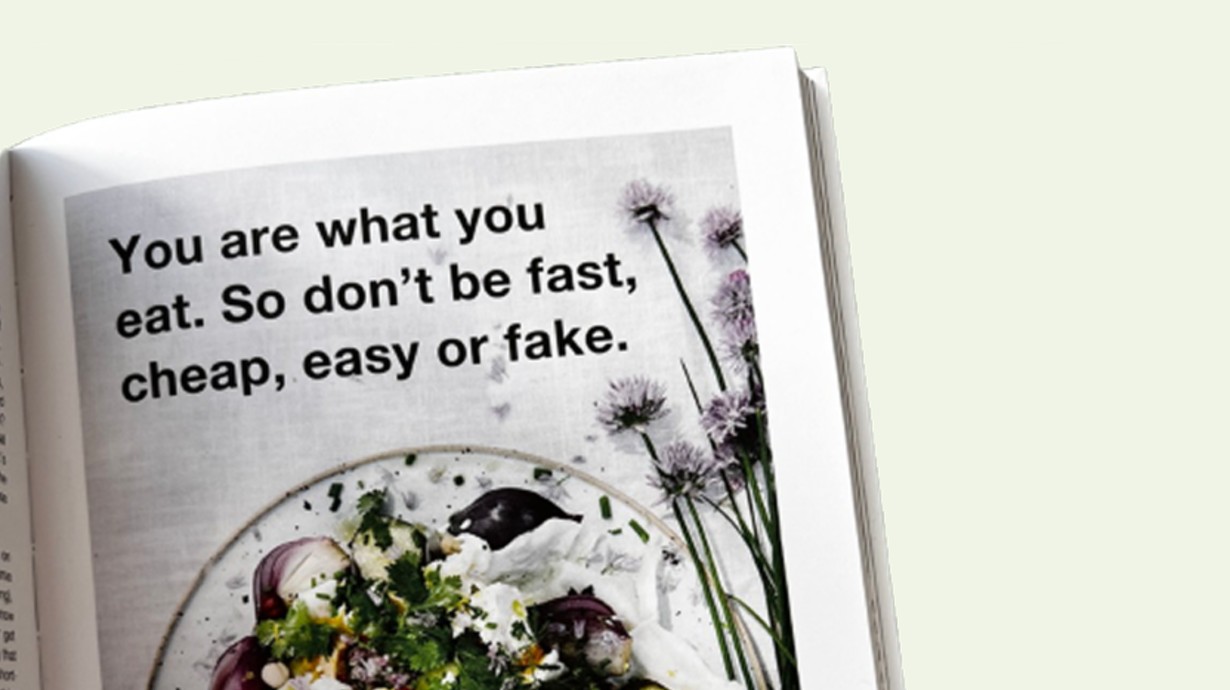
The idea of ‘you are what you eat’ is not new. In his 1825 book The Physiology of Taste, French lawyer and gastronome Jean Anthelme Brillat-Savarin (yes that cheese was named after him) said: “Tell me what you eat, and I will tell you what you are.” In this extract, he
identified how, just as today, the wealthy bourgeois ate entirely different foods, prepared with different techniques, than the working-class.
The book includes chapters on digestion, chemistry, and obesity, as he viewed food as a way to maintain the body’s natural balance and constitution. However, he was not using this specific quote to preach a healthy diet. The shift toward using the phrase for medical and nutritional advice didn’t happen until the 1930s and 1960s, when health food advocates adopted his ideas.
Today however, thanks to the advancement of science we are now far better informed on the impact of food on our health, as opposed to blindly eating Bran Flakes for breakfast during the 80s and 90s because we knew there was something about fibre that was good for us.
The term Microbiome has become more commonplace in recent years, although according to Tim Spector, a world leading scientist on the subject: ‘Research into the microbiome has shown how reductionist our view of food has been for so many decades it is not an organ in the conventional sense, but a community of tiny organisms which together weigh as much as our brain. The microbiome consists of a mix of up to 100 trillion bacteria fungi parasites and 500 trillion Mini viruses outnumbering the number of cells in our body. The vast majority live in our large intestine, alongside most of our immune cells, and each microbe is capable of producing hundreds of chemicals which affect which act as many factories regulating our immune system providing many of the key metabolites and vitamins in our bloodstream including our brain chemicals that can affect our mood and even our appetite unlike other parts of our bodies the mix of gut microbes their genes and their chemicals they produce is unique to each of us and differs in each individual even genetically identical twins’. (1) Our gut is not just a turbine, it is an information processing supercomputer. (2)
However, according to Chris Val Tulleken, ‘things have changed over the past 150 years and food has become …not food and we’ve started eating substances constructed from novel molecules and using processes never previously encountered in our evolutionary history, substances that can’t really even be called food. Our calories increasingly come from modified starches, from inverted sugars, hydrated protein isolates and seed oils that have been refined, bleached, deodorised and hydrated, and the calories have been assembled into concoctions using other molecules that our senses have never been exposed to previously’. (3)
So what exactly are we eating?
The term for all of this new ‘food’ is Ultra Processed Food (UPF). The definition on what this is and its sub categories is complicated, but essentially, if it is wrapped in plastic, had at least one ingredient you don’t recognise, or would not be in a home kitchen, or makes a health claim, then it is likely to be a UPF.
70% of the food produced for our supermarkets counts as UPF (4), and in the UK and US, 65% of daily energy intake comes from UPFs, compared to countries such as Italy and Romania where it is only 15% (4). In the UK, children consume nearly two thirds (61%) of their daily energy from UPFs – worse than in the US, Australia or anywhere in the world. (4)
The immune cells living in your gut make up the largest component of your body’s immune system. (2), yet without the traditional type of food that our bodies have evolved with there is a serious impact on our health. The impact on this immune systems means:
- 1 in 5 deaths globally could be prevented with improved diets (4)
- 80% of chronic diseases could be improved by diet and lifestyle changes (4)
In industrialised countries like the UK, each person consumes 8 kilograms of food additives per year on average. To put this into perspective, on average we only buy 2 kilogrammes of flour per year for home baking. (3)
Consequently, The number of people living with disease doubles every 5 years beyond the age of 65 (2).
According to Frederica Amati, we have too much poor quality food available in our food environment, which leaves most of the population overweight, whilst also being undernourished.(4)
Emeran Mayer believes that meat, eggs and milk that come from animals, and derivatives of these products (often no longer recognisable as food) in today’s UPFs are dramatically different from only 50 years ago, and they have fundamentally altered our diet. Unfortunately, evolution has not had enough time to program our defence against these changes, and as a result, our brave new food supply has caught our bodies unprepared. (2)
Why has this happened?
Many of the changes have also been impacted by people’s increasingly sparse free time and budgets, where large manufacturers are able to undercut supermarket prices for the raw ingredients. This is also worsened by marketing and promotions pressuring people to consume more UPFs, and reluctance from successive governments to legislate sufficiently against the growth of this industry represents a failure to put people over profits.
Due to our growing understanding of the microbiome and the trillions of tiny bacteria that are living in our guts, the previously touted mantra of eat fruit or veg 5 a day is moving to eat 30 plants per week, aiming to help provide the level of variety needed to support of trillions of bacteria powering your immune system, as they all have different food preferences, much like we have our preferences.
So what can we do?
Key things to consider – Avoid:
- Processed food wrapped in plastic.
- Food and Food Adverts that make health claims
- Foods where you don’t recognise the name of the ingredients
And wherever possible, aim for the 30 plants per week, in a form that you recognise as food and try to avoid food that is fast, cheap, easy or fake!Because perhaps the simplest way to think about it is this is Don’t let your food be fast, cheap, easy or fake!.
References
1 – Spoon Fed – Prof Tim Spector OBE – 2022
2 – The Mind Gut Connection – Emeran Mayer MD – 2016
3 – Ultra Processed People – Dr Chris van Tulleken – 2024
4 – Everybody Should Know This – Dr Federica Amati – 2025