The Book That Changed How I Thought About My Health
5th August 2026
There are moments in life when you realise that something has to change.
For me, that moment came after a serious illness. I had had a close shave with sepsis and what was described as the potential for a stroke. When I was told that this was essentially a run of bad luck, something inside me questioned whether I was really prepared to leave my health entirely in the hands of luck. Read my story.
I wanted to understand more.
What could I do to support my own health? Could the way I lived, thought and responded to stress make a difference?
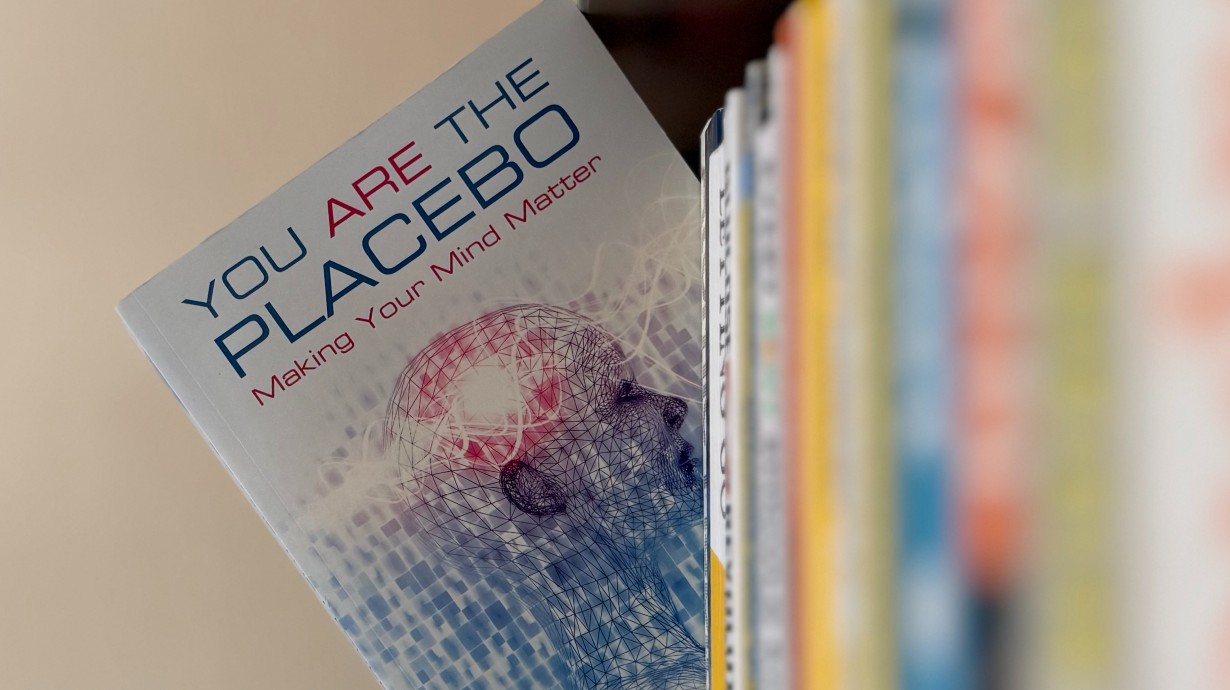
The first book I picked up on that journey was You Are the Placebo by Joe Dispenza.
It challenged the way I had been thinking about health and became an important starting point for my own journey of recovery.
The power of what we believe
One of the stories in the book that stayed with me was Dispenza’s own experience following a serious cycling accident.
A triathlete, he was knocked off his bike during an Ironman competition and suffered a severe back injury. He was told that surgery, involving the insertion of a rod, was his best hope of walking again. Instead, he chose to focus intensely on visualising his spine healing.
He describes spending weeks lying face down, visualising his body healing. After eight weeks he got up and walked, and a few weeks later returned to work.
Whatever conclusions we draw from his experience, it raises an interesting question:
How much influence do our thoughts, beliefs and expectations have on our physical wellbeing?
That question really captured my attention.
The placebo effect
The book explores the placebo effect — the phenomenon where someone’s expectations and beliefs about a treatment can influence their experience of symptoms and, in some circumstances, aspects of their physical health.
The documentary Heal, which accompanies the book, explores similar ideas through interviews and personal stories. One of the people featured had worked within the pharmaceutical industry and discussed the role of placebo groups when new medicines are tested.
It made me think differently about the phrase “it’s all in your head.”
What I took from the book was that our minds and bodies are constantly communicating. The way we interpret what is happening to us, the language used to describe our experiences and the meaning we give to them can all influence how we respond.
For me, this wasn’t about believing that positive thinking could magically cure illness.
It was about recognising that I had some influence over how I responded to my circumstances.
And that was empowering.
Breaking the cycle
Another idea from the book that really resonated with me was the cycle between our thoughts, choices, behaviours, experiences and emotions.
Our thoughts influence the choices we make. Those choices become behaviours, and our behaviours create experiences. Those experiences generate emotions, which can then reinforce the thoughts we started with.
If we continually repeat the same patterns, we can end up creating more of the same.
The vicious cycle:
- Think the same thoughts = make the same choices
- Making the same choices = same repeated behaviours
- Demonstrating the same behaviours = creating the same experiences
- Creating the same experiences = feeling the same emotions which drive the same thoughts (back to the beginning of the circle)
Ultimately, these choices being repeated over and over again, may indicate that your environment is controlling how you think, act and feel.
However, just changing the environment, thoughts or behaviours once may not change the future. We need to repeat these changes to train our brain to turn these thoughts into new behaviours. This is rarely a simple process. As part of the changes, we may feel cravings and real withdrawals, caused by the chemical or emotional addiction of the body changing.
In order to change, we need to change something about ourselves, something more fundamental than our present circumstances or environment. If we want to create something different in the future, sometimes we need to change something about how we live in the present.
Understanding stress differently
This led me to think much more deeply about chronic stress.
When we experience prolonged stress, our bodies can spend too much time in a state of heightened alertness, constantly responding to perceived threats.
When we live this way for too long, it can become difficult to switch off. We can become focused on controlling situations, anticipating problems, trying to force outcomes and constantly analysing what might go wrong.
Our attention becomes focused on what needs fixing or what might threaten us.
The book contrasts this with cultivating more positive emotional states — experiences such as gratitude, compassion, trust, forgiveness and love.
For me, this was an important realisation.
I didn’t need to wait until my circumstances were perfect before I started looking after myself.
I could begin by changing how I responded to those circumstances.
I could create space to breathe.
I could slow down.
I could become more aware of my thoughts and emotions.
And I could create an environment in which my body had more opportunity to rest and recover.
Epigenetics — another piece of the puzzle
The book also introduced me to the concept of epigenetics.
In simple terms, epigenetics looks at how factors such as our environment and lifestyle can influence how our genes are expressed, without changing the DNA sequence itself.
This doesn’t mean that we can simply “switch off” disease by thinking positively. Genetics, biology, environment and medical care are all important.
But it did give me another reason to take my lifestyle seriously.
Our biology isn’t completely separate from the way we live.
What we eat, how we move, how we sleep, how we manage stress and the environments we create around ourselves can all play an important role in our health.
That was another shift in my thinking.
Rather than seeing my health as something completely outside of my control, I began to see my everyday choices as opportunities to support my body.
Where this journey has taken me
Looking back, You Are the Placebo was just the beginning.
It opened the door to a much wider exploration of health and wellbeing and encouraged me to become more curious about what my body needed, rather than simply accepting that my health was something that happened to me.
I began making small changes in my everyday life — creating time away from stress, practising mindfulness and breathwork, and introducing gentle yoga and stretching.
There wasn’t one magic answer.
It was about gradually understanding myself better, paying attention to how I felt and finding the things that helped me feel more balanced, more resilient and more connected to my own wellbeing.
And perhaps that is one of the biggest lessons I took from this experience: you don’t have to change everything at once.
Sometimes we know we want to make changes, but don’t know where to start. Sometimes life, habits, stress and everything else going on around us make change feel difficult.
For me, having the space to learn, explore and make changes at my own pace made a real difference.
That experience is a big part of why I became interested in health coaching.
I now want to create that same kind of space for other people — a place to pause, reflect on what is working and what isn’t, and explore what small changes might support the life and health they want.
You don’t need to have all the answers.
You don’t need to get everything right.
Sometimes it starts with simply becoming curious.
What might be possible if you gave yourself the time and space to find out?
That question was the beginning of my journey — and it continues to shape the way I approach health today.